


Trees across Perth and Western Australia are increasingly vulnerable to a range of insect pests and fungal diseases due to climate variability, urban stress, and the spread of invasive species. Common threats include Eucalyptus Leaf Beetles, Citrus Gall Wasps, and the Polyphagous Shot Hole Borer, all of which can weaken or kill trees through leaf loss, structural damage, or fungal infection. Native pests like the Gum Leaf Skeletoniser also contribute to long-term canopy decline, especially in stressed or unmanaged trees.
Fungal pathogens such as Armillaria (root rot) and Phytophthora cinnamomi (dieback) are widespread and difficult to detect in early stages, often spreading through soil and water. These diseases attack roots and internal structures, leading to gradual decline or sudden tree death. Because symptoms often appear late, early detection and professional assessment are critical.
At Milners Tree Solutions, we prioritize the early identification and management of pest and disease issues through expert inspection, pruning, and health-focused care strategies. Prompt intervention helps preserve Perth’s urban canopy, reduce hazards, and extend the life of valuable trees in both private gardens and public landscapes.
Insect Pests
Western Australian trees face threats from several pest insects, including the Eucalyptus Leaf Beetle, which defoliates young eucalypts; the Citrus Gall Wasp, which causes damaging galls in citrus branches; and the invasive Polyphagous Shot Hole Borer, which introduces a deadly fungus into trees. Other notable pests include Gum Leaf Skeletoniser, which strips eucalyptus leaves, and Longicorn Borers, which tunnel into trunks and branches, weakening structural integrity.
Milners Tree Solutions can help identify and manage pest infestations through expert inspection and ongoing tree care. Early signs—such as leaf damage, galls, boreholes, or dieback—can be subtle, but our team is trained to spot them. We offer practical, targeted control methods, including pruning, canopy management, and advice on treatment options to keep your trees healthy and pest-resilient.

SHOT HOLE BORER
The Polyphagous Shot Hole Borer (Euwallacea fornicatus) is an invasive beetle threatening trees across Perth.
This tiny pest bores into tree trunks and branches, introducing a harmful Fusarium fungus that disrupts water flow and weakens the tree. Infestations cause wilting, dieback, and eventually tree death, affecting over 100 tree species, including native gums, plane trees, and avocado. First detected in 2021, PSHB is spreading, with no effective chemical treatment available.
Early detection is critical—look for tiny entry holes, dark stains, oozing sap, and sawdust-like frass around the bark. Report suspected cases to WA’s Department of Primary Industries and Regional Development (DPIRD) and avoid moving firewood or green waste from infested areas.
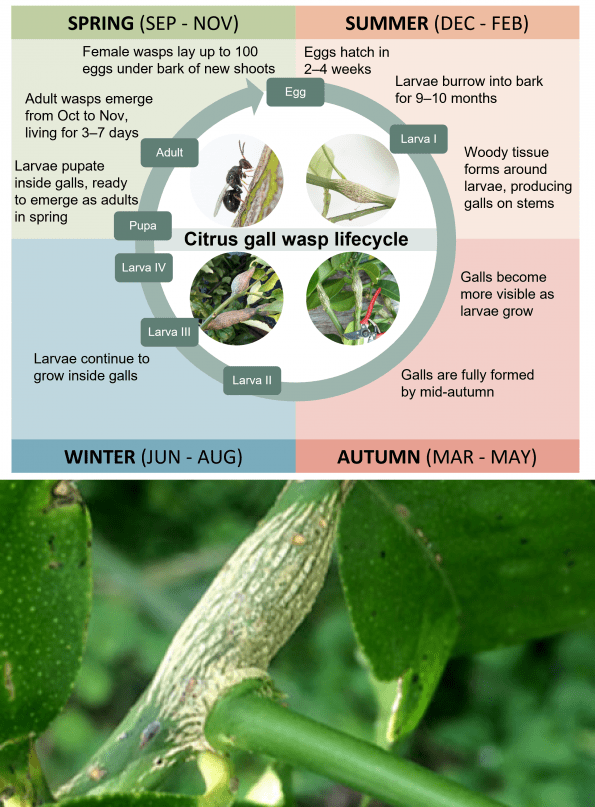
CITRUS GALL WASP
Citrus Gall Wasp (Bruchophagus fellis) is a small native wasp that poses a significant threat to citrus trees, particularly lemon, lime, and orange varieties.
The larvae develop inside tree branches, creating characteristic swollen galls that weaken the tree and reduce fruit production. Infestations can lead to stunted growth and increased susceptibility to disease.
Effective management includes pruning and destroying affected branches, introducing beneficial parasitoid wasps, and applying horticultural glue traps to prevent adult emergence.
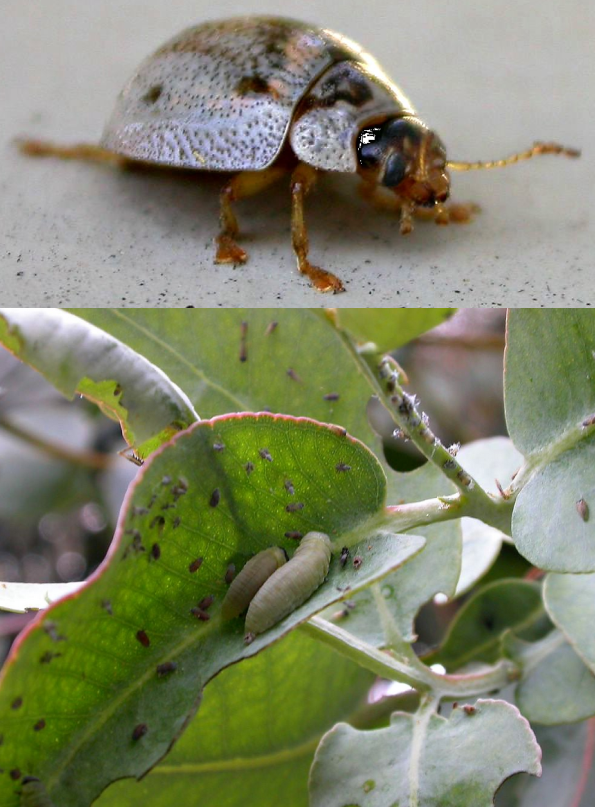
EUCALYPTUS LEAF BEETLE
Eucalyptus Leaf Beetle (Paropsisterna spp.) is a significant pest of eucalyptus trees, causing severe defoliation that weakens trees and reduces their growth.
Both adult beetles and larvae feed on leaves, skeletonizing them and leaving behind only veins. Infestations are particularly problematic for young trees and those in urban environments, where repeated defoliation can lead to long-term stress.
Control methods include introducing natural predators like parasitic wasps, applying targeted insecticides, and maintaining tree health to improve resilience against damage.
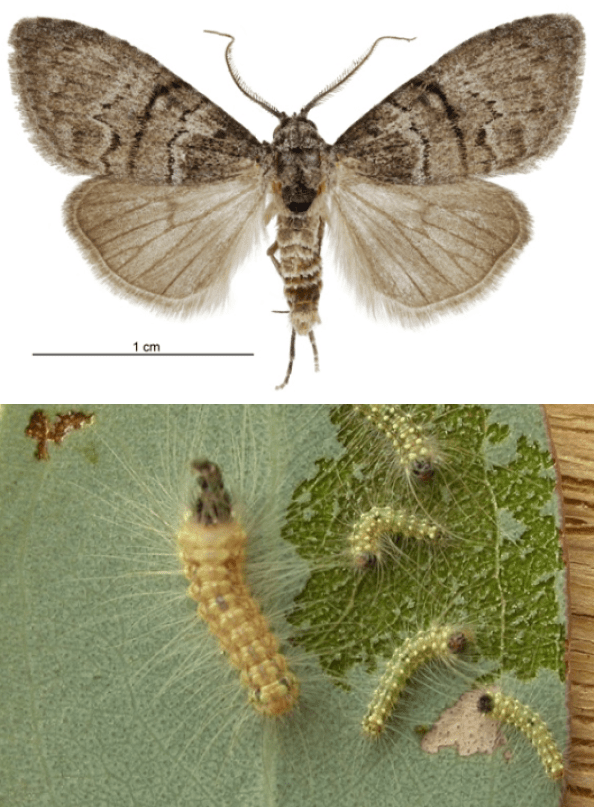
GUM LEAF SKELETONIZER
Gum Leaf Skeletoniser (Uraba lugens) is a native moth species whose larvae feed voraciously on eucalyptus leaves, leaving only the veins behind—a process known as skeletonising.
This defoliation weakens trees, reducing growth and making them more vulnerable to other stresses. In Western Australia, the species has caused major damage in jarrah forests and urban areas.
The larvae are also covered in irritating hairs, posing a minor nuisance to people. Control includes pruning affected branches, encouraging natural predators like parasitic wasps, and applying targeted biological treatments when necessary.
Fungal and Bacterial Diseases
Fungal and bacterial diseases present serious risks to the health of Western Australian trees. Common fungal pathogens like Phytophthora cinnamomi (dieback), Armillaria (root rot), and sooty mould are widespread across urban and native landscapes, attacking roots, trunks, and foliage. Though less common, bacterial infections such as wetwood can still signal internal decay and contribute to long-term decline in affected trees.
Milners Tree Solutions provides early detection and expert management of these diseases, helping to prevent irreversible damage. We assess visible symptoms—such as discoloured leaves, oozing sap, or crown dieback—and recommend appropriate interventions, from targeted pruning to site hygiene and soil treatments.
PHYTOPHTHORA DIEBACK
Phytophthora cinnamomi is the most serious fungal pathogen affecting native vegetation in Western Australia. It infects tree roots, blocking water and nutrient uptake, which leads to yellowing leaves, thinning canopies, and eventual death.
It spreads easily through soil and water, especially in poorly drained areas or disturbed environments. Many banksias, jarrah, and grass trees are highly susceptible.
Management involves strict hygiene measures, soil treatments with phosphite, and limiting foot or vehicle traffic in affected zones.
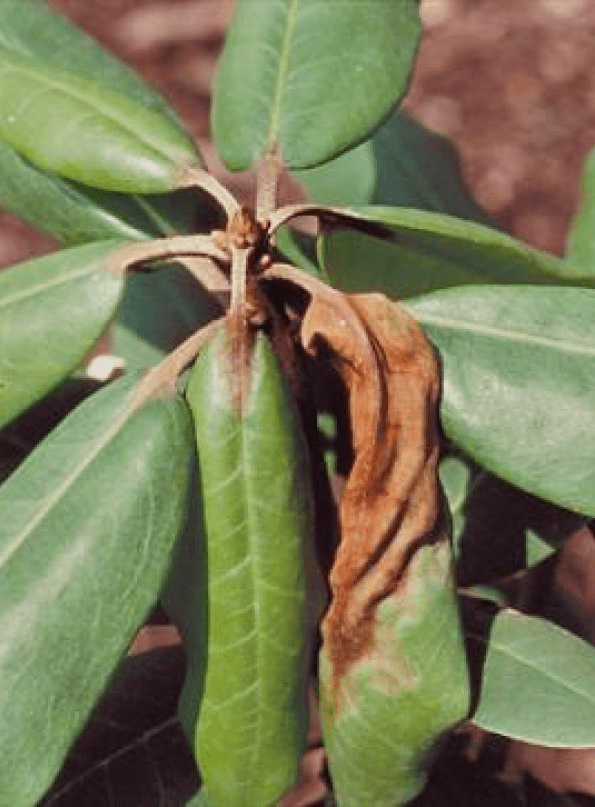
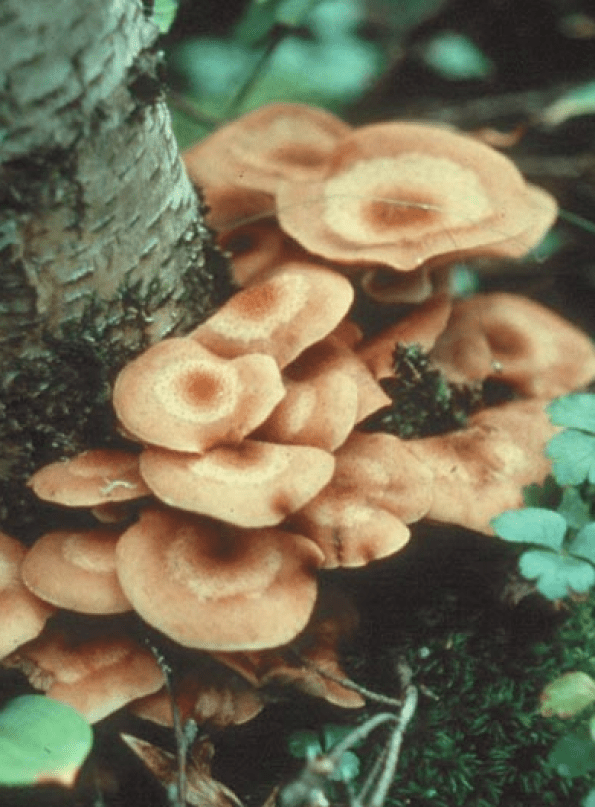
ARMILLARIA ROOT ROT
Armillaria luteobubalina is a destructive root fungus found in both native forests and urban tree plantings across WA. It spreads through soil and root contact, often killing trees slowly by rotting their root systems.
Early signs include dieback, leaf yellowing, and white fungal growth under the bark near the base. Some trees may suddenly collapse after years of unseen damage.
There is no cure once infection takes hold. Control focuses on prevention, site hygiene, and removal of infected stumps or roots.
SOOTY MOULD
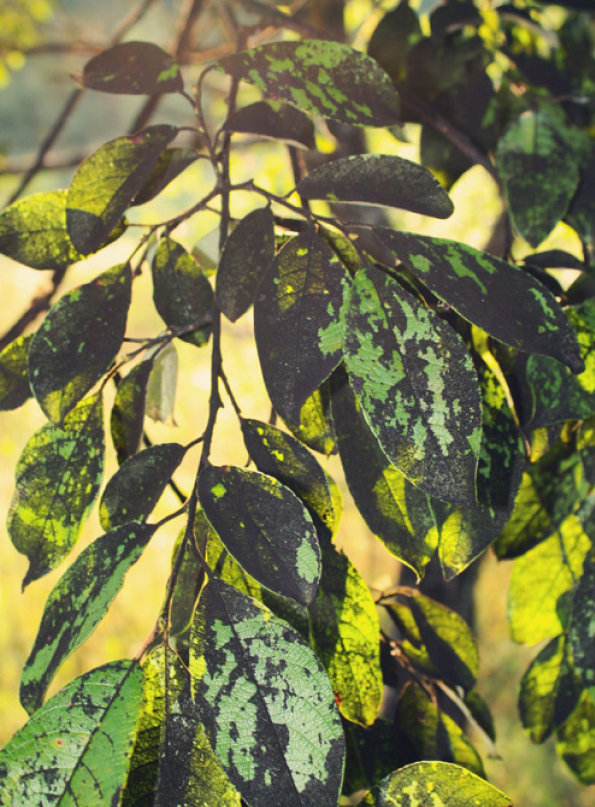
Sooty mould fungi grow on the sugary excretions (honeydew) of sap-sucking insects like aphids and scale. While not directly harmful to the tree, the black fungus can cover leaves and stems, blocking sunlight and reducing photosynthesis.
It’s especially common in warmer months and in urban trees under stress. Though unsightly, it is manageable.
Controlling the underlying insect infestation is key, followed by washing or pruning affected areas.
BACTERIAL WETWOOD
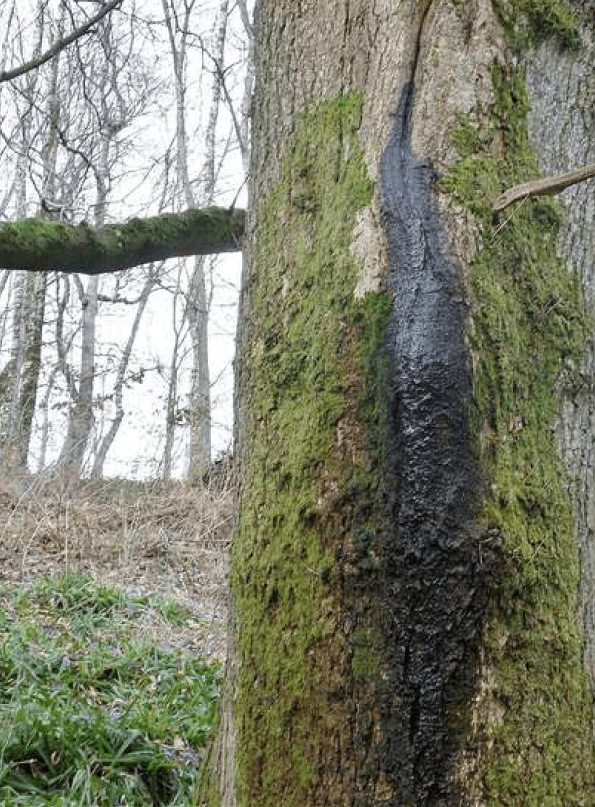
Also known as slime flux, this bacterial disease affects a range of hardwood trees, including elms and poplars. It causes foul-smelling, dark ooze to leak from trunk cracks or wounds.
It results from bacterial fermentation of sap inside the tree, often due to internal stress or injury. Though not usually fatal, it signals internal decay and can attract insects.
There’s no direct treatment; management involves promoting tree health and avoiding unnecessary trunk wounds.
Got any questions about pests, diseases or fungi affecting your trees?
 Milner Trees